Shelby Township, Michigan
Throwing the game winning touchdown, hitting a bench PR, playing catch with the kids: all require a shoulder that can perform. Our physyical therapists will help you build a plan to get back in the game.
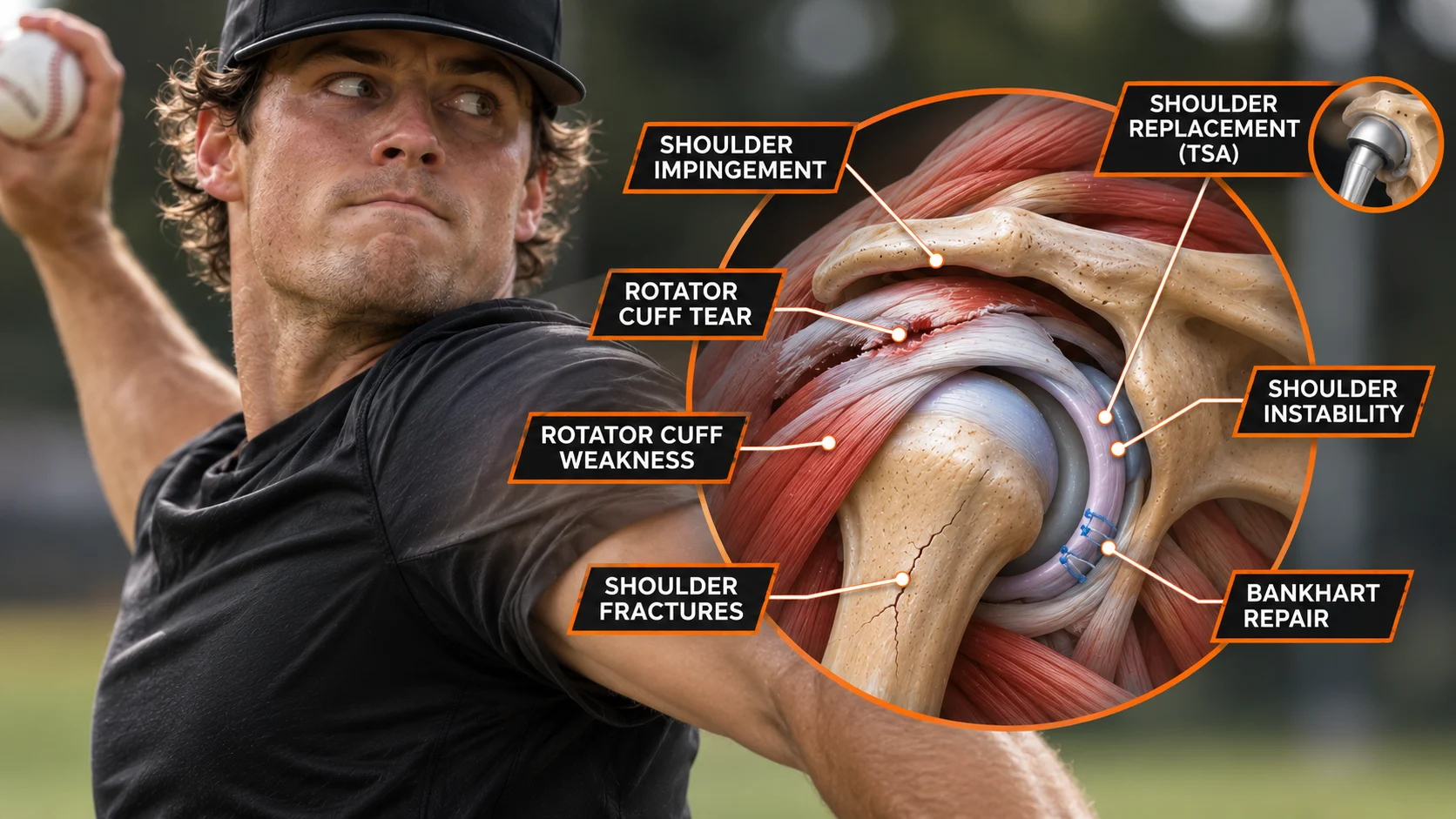
The rotator cuff is the group of four muscles and tendons that keeps the ball of your upper arm centered in the shoulder socket. Tears happen from a fall or heavy lift, or from wear over time, and cause a deep ache in the shoulder, pain at night and weakness lifting or rotating your arm.
Irritation of the rotator cuff tendons from repeated overhead work like throwing, swimming, pressing and serving. It usually starts as an ache in the front or side of the shoulder when you reach overhead and can build until it hurts at night.
The rotator cuff tendons get pinched under the top of the shoulder blade when you raise your arm. Expect pain on the front or outside of the shoulder when reaching overhead or behind your back, and trouble sleeping on that side.
The capsule around the shoulder joint thickens and tightens, slowly locking the shoulder up. It moves through stages of pain, then stiffness, then thawing, and can make reaching up, out or behind your back nearly impossible.
The ball of the upper arm slips partly or fully out of the socket, usually from a fall, a hit or the arm being forced back. After the first one, the shoulder can feel loose and slip again when you throw, tackle or reach overhead.
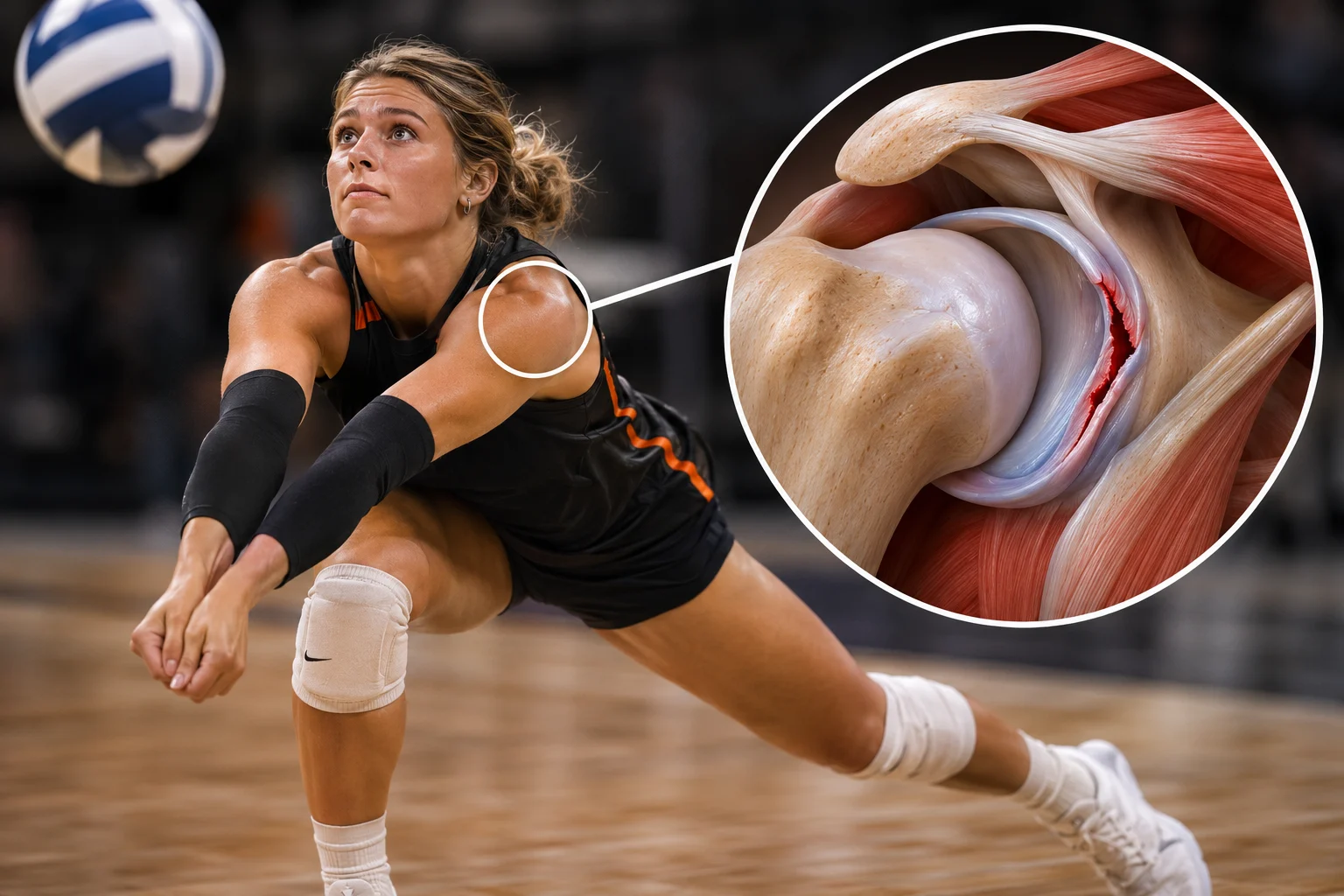
The labrum is the ring of cartilage that deepens the shoulder socket. It tears with a dislocation, a fall on an outstretched arm or repeated throwing, causing pain, catching, popping and a shoulder that feels unstable.
Irritation of the biceps tendon where it runs along the front of the shoulder. Common with throwing, swimming and lifting, it causes pain at the front of the shoulder that gets worse with overhead work and pulling.
An injury to the ligaments where the collarbone meets the top of the shoulder blade, usually from falling straight onto the shoulder. It brings pain and swelling on top of the shoulder and sometimes a visible bump.
The cartilage on the ball and socket gradually wears down. Expect deep shoulder pain, stiffness, grinding and lost range of motion that make pressing, reaching and sleeping harder.
Rehab after rotator cuff repair, labral repair or shoulder replacement. We protect the repair early, then restore your motion, rebuild strength and get you back to lifting, throwing and overhead work.
How we treat it
A high schooler chasing a D1 scholarship. A parent who wants to run with their kid again. Regardless of your goal, you need to be performing at your best. We keep the same standard of treatment regardless of your level of activity. Work with our team: 1 on 1 capacity with your Doctor of Physical Therapy, every single visit.
Where physical therapy meets performance. We keep building until you're stronger than you were before the injury, not just back to where you started.
We use strength and power testing to drive your plan of care. See your progress with trackable data with our OVR force plate and VALD technology.
Signing day, a new weight lifting PR or running around in the yard with your children. Your plan is built to get you back to what you love, stronger than ever before.
Book your evaluation. Let's get to the root of the problem and create the game plan to get you back in the game.
Insurance & payment info